The Second Affiliated Hospital of Hunan University of Chinese Medicine, also known as the Hunan Provincial Hospital of Traditional Chinese Medicine, is a national key TCM hospital with a history dating back to 1934, originally established as Xiang Provincial National Medicine Hospital.
As a Grade A Class III comprehensive TCM hospital, it is renowned as the “Birthplace of Huxiang Traditional Chinese Medicine” and the “Former Site of the Medical Sage”. The hospital integrates medical treatment, education, research, prevention, and rehabilitation, with strong特色 in traditional Chinese medicine combined with modern clinical practice.
The hospital is also a National Clinical Research Base for Traditional Chinese Medicine, operating:
4 National Clinical Key Specialties (Anorectal, Dermatology, Orthopedics & Traumatology, Gynecology)
9 Key Specialties designated by the National Administration of Traditional Chinese Medicine
An annual outpatient and emergency volume exceeding 1 million patient visits
With the continuous advancement of smart hospital construction, the hospital faced increasing challenges in achieving accurate and unified time synchronization across:
46 clinical departments
9 medical technology departments
Multiple buildings and functional zones
Critical scenarios such as multi-device coordination in operating rooms, cross-department consultations, and traceability of TCM preparation processes placed exceptionally high demands on time accuracy and consistency.
Multi-Device Time Drift in Operating Rooms
Time discrepancies at the second level between anesthesia machines, patient monitors, and surgical timers affected the alignment of medical operation timelines required by JCI international accreditation standards.
Traceability Gaps in TCM Preparation Processes
In the hospital’s pharmacy, 18 intelligent decoction machines operated with unsynchronized clocks, causing 3–5 minute discrepancies between preparation batch records and the HIS system.
Low Efficiency in Cross-Building Collaboration
Independent clock systems in Zhongjing Building and the Comprehensive Medical Building resulted in over 200 ms latency between teleconsultation video streams and real-time vital sign data.

Shutai Electronics delivered a hospital-wide, satellite-synchronized time management system, establishing a unified and authoritative time reference for all medical, pharmaceutical, and administrative operations.
| Device Type | Model | Deployment Location | Key Specifications |
|---|---|---|---|
| GPS/BeiDou Dual-Mode Timing Antenna | AT5500 | Rooftop signal reception point | Frequency stability 10⁻¹²–10⁻⁹; GPS ≤50 ns, BeiDou ≤100 ns, GLONASS ≤30 ns |
| NTP Network Time Server | TQ5519 | Hospital core data center | BeiDou/GPS dual-mode; 1U 19" rack-mount; standard 1 LAN port (expandable) |
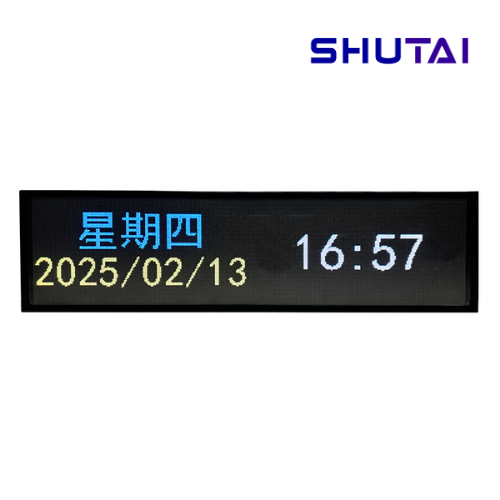
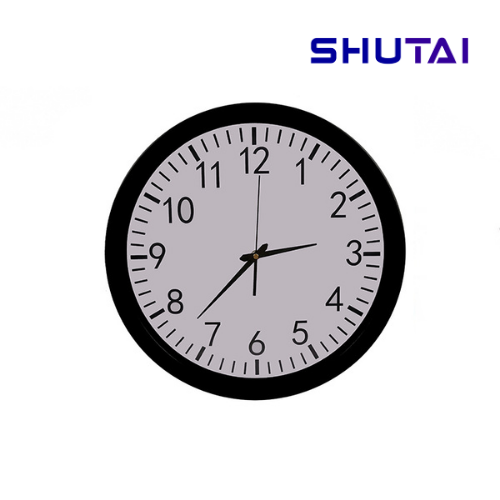
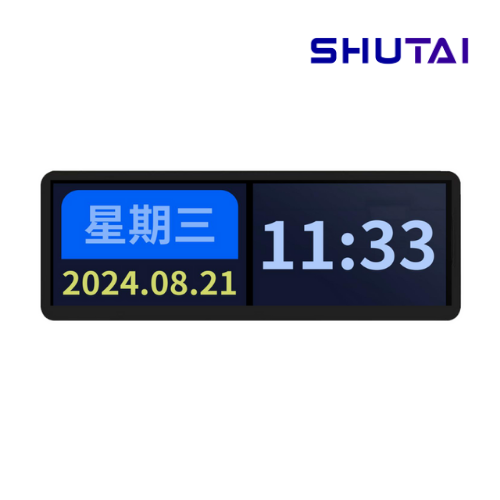
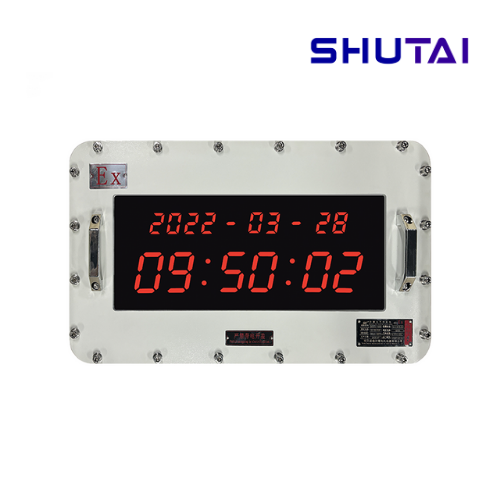
| Single-Sided Digital Clocks | DH2248 | Nurse stations, pharmacies, consultation rooms | Displays time, date, and weekday |
| Double-Sided Digital Clocks | DB2248 | Corridors, operating rooms, ICU | MTBF ≥100,000 hours; auto synchronization |
| Time Monitoring & Management Software | G3000 | Hospital IT Center | Centralized monitoring, alarms, and user management |
GPS/BeiDou dual-mode satellite synchronization
Nanosecond-level timing accuracy
Hospital-wide authoritative time reference
Clear display of HH:MM:SS, YYYY-MM-DD, weekday
Suitable for high-intensity clinical environments
Reliable operation under wide temperature ranges
Real-time monitoring of all networked clocks and computers
Automatic alarms when time deviation exceeds thresholds
User role and device classification management
Certified software with official intellectual property registration
Automatic time correction on power-up and scheduled daily synchronization
Eliminates manual calibration errors
Reduces IT workload and maintenance costs
Accurate Surgical Timeline Alignment
Ensured precise coordination of surgical devices, meeting JCI requirements for procedural time consistency.
Enhanced Traceability of TCM Preparation
Fully synchronized timestamps between intelligent decoction equipment and HIS systems, strengthening batch traceability and compliance.
Improved Cross-Building Clinical Collaboration
Reduced latency in teleconsultations and real-time patient data synchronization, significantly improving diagnostic efficiency.
Stronger Smart Hospital Infrastructure
Established a foundational time management layer supporting future digital medical systems.
14 Years of Industry Focus in healthcare, education, transportation, public security, and government sectors
Medical-Grade Time Accuracy with GPS/BeiDou synchronization
Comprehensive Product Portfolio: clocks, electronic calendars, NTP time servers
Multiple Synchronization Options: satellite, NTP, 4G wireless, Wi-Fi
Proven Industry Recognition, including long-term sponsorship of the China Chest Pain Center Conference
 Back to List
Customer Hotline: