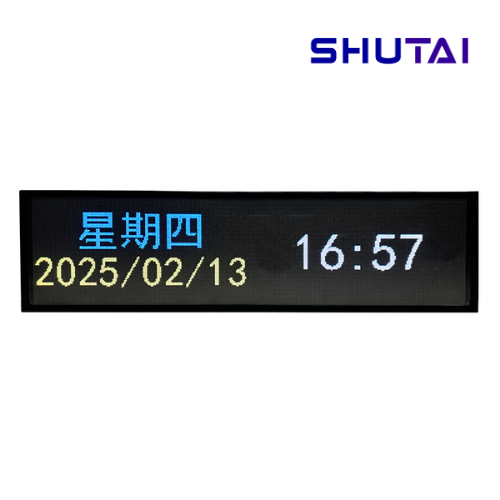
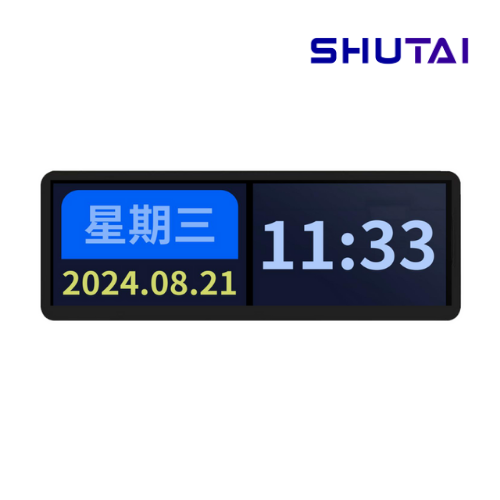
In scenarios such as airport terminals, underground control centres, and financial trading floors, thousands of digital clocks tick in perfect synchronisation, not a millisecond out of step. Behind this precision of timekeeping, the master clock system plays a pivotal role. Shutei Synchronisation Clocks will delve into the technical principles, dissecting the core architecture of digital clock systems.
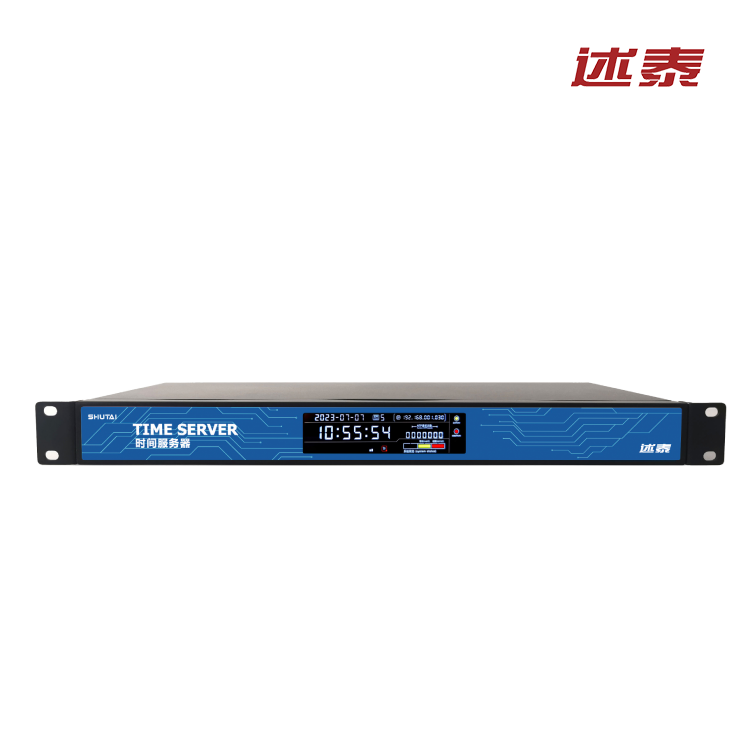
I. Operating Principles and Technical Advantages of the Master Clock System
The master clock system employs a hierarchical time architecture. The Grandmaster Clock acquires UTC standard time via GPS/BeiDou satellites, atomic clocks, or terrestrial timing signals. It then distributes time signals to subordinate clocks through specialised protocols such as PTP (Precision Time Protocol) or IRIG-B code, utilising fibre optic cables, coaxial cables, or dedicated networks. This architecture offers three core advantages:
Microsecond-level synchronisation accuracy: IEEE 1588v2 protocol achieves ±100ns synchronisation precision, far surpassing NTP protocol's millisecond-level error
Interference resistance: Dedicated time networks and CRC verification mechanisms ensure 99.999% time availability
Intelligent time correction mechanism: Employing Kalman filtering algorithms to dynamically compensate for transmission delays, eliminating cumulative errors
II. Feasibility Analysis of Alternative Solutions
Alternative solutions may be employed under specific circumstances:
A major hospital once attempted to replace its master clock system with an NTP cluster, only for network jitter to cause a 3-second deviation in operating theatre clocks. The master clock architecture was ultimately reinstated. This case underscores the imperative for dedicated timing systems in critical domains.
III. Technical Decision-Making Model for System Selection
A three-dimensional evaluation framework should be established during decision-making:
Time Accuracy Requirements:
- Nuclear power plant control demands microsecond-level precision, whereas shopping mall signage systems require only second-level accuracy.
System Scale Dimension: Systems exceeding 200 nodes should adopt a master clock architecture
Disaster Recovery Level: Financial systems require hot backup with caesium atomic clocks + dual GPS sources
Technical Selection Recommendations:
Critical Infrastructure (e.g., Rail Transport): Mandatory master clock system
Industrial Parks: GNSS-based master clock + fibre-optic ring network
Small commercial premises: Recommended NTP server + SNTP client solution
In the era of ubiquitous connectivity, time synchronisation has evolved from a foundational function to critical infrastructure. The million-device connection density per square kilometre in 5G networks and the 1μs synchronisation requirements for motion control in industrial internet are driving time synchronisation technology towards ever-greater precision. When selecting clock systems, one must anticipate expansion needs over the next 3-5 years, ensuring sufficient technical redundancy for digital transformation.
 Back to List

Customer Hotline: