In modern healthcare environments, accurate and synchronized time is more than just a convenience—it is a critical operational requirement. Hospitals rely on precise timing to coordinate medical procedures, manage patient records, and ensure the safe operation of medical equipment. This is why many healthcare facilities are now implementing network synchronized clock systems, such as NTP clocks, Wi-Fi clocks, and POE clocks, to maintain consistent time across all departments.
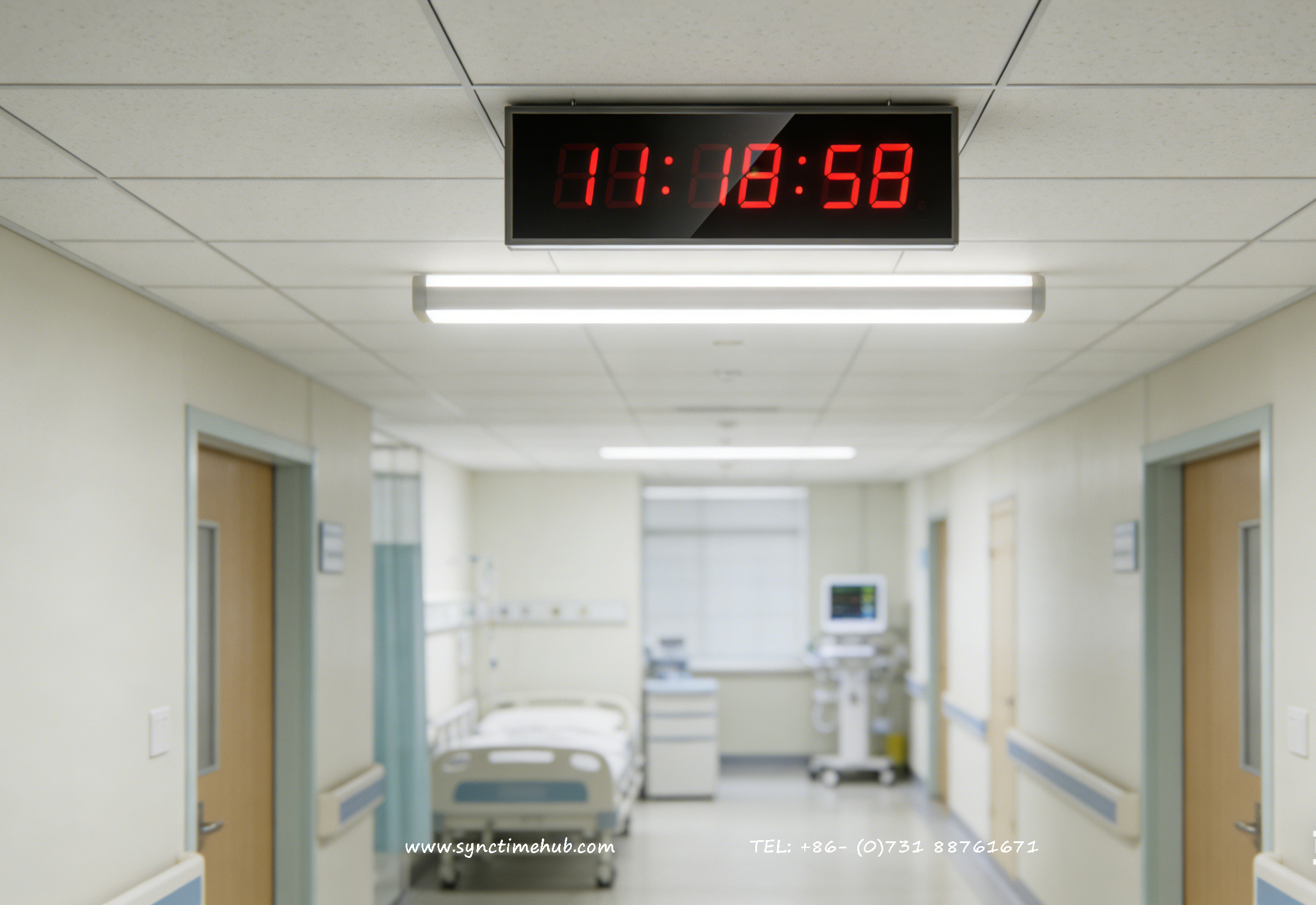
In hospitals and medical centers, every second matters. Accurate timekeeping helps medical staff coordinate critical activities such as surgeries, medication schedules, patient monitoring, and emergency responses. Without synchronized clocks, different departments may operate with slightly different times, which can lead to confusion, documentation errors, or delays in treatment.
A centralized time synchronization system ensures that all clocks across the hospital—from operating rooms to patient wards—display the same accurate time.
Hospitals are complex environments where multiple teams work simultaneously. A hospital synchronized clock system helps streamline operations by ensuring consistent time across departments including:
Emergency rooms
Operating theaters
Intensive care units
Laboratories
Administrative offices
By implementing NTP time servers and network clocks, hospitals can improve workflow coordination and reduce time-related errors.
Patient safety is one of the most important priorities in healthcare. Accurate time synchronization ensures that medical records, medication administration, and diagnostic reports are properly timestamped. This helps medical teams maintain accurate documentation and traceability, which is essential for treatment decisions and regulatory compliance.
Many healthcare facilities now deploy GPS synchronized clocks or network time protocol (NTP) systems to maintain highly accurate time across all systems and devices.
Today’s healthcare environments use advanced time synchronization technologies, including:
NTP clocks connect to a central time server to maintain accurate and consistent time across the network. They are widely used in hospitals, laboratories, and healthcare facilities.
Wi-Fi synchronized clocks provide flexible installation and are ideal for areas where wired infrastructure may be limited.
POE (Power over Ethernet) clocks provide both power and network connectivity through a single Ethernet cable, ensuring stable and reliable synchronization.
Some hospitals use GPS synchronized clock systems to maintain ultra-precise time accuracy across their entire facility.
Beyond patient care areas, cleanrooms and laboratories also require precise time synchronization. Accurate timing ensures that experiments, testing processes, and pharmaceutical manufacturing procedures are performed consistently and reliably.
A network synchronized clock system helps maintain operational standards and compliance with industry regulations.
When selecting a clock system for healthcare environments, organizations should consider:
Time accuracy and reliability
Network infrastructure (Wi-Fi or Ethernet)
Ease of installation and maintenance
Integration with existing systems
Scalability for future expansion
A well-designed time synchronization solution can support hospitals, laboratories, and research facilities for many years.
As healthcare systems continue to evolve, accurate time synchronization will remain essential for operational efficiency, patient safety, and data accuracy. Implementing a network synchronized clock system ensures that every department within a hospital operates on the same precise time.
At SyncTimeHub, we provide advanced time synchronization solutions, including Wi-Fi clocks, POE clocks, NTP time servers, and GPS synchronized clock systems designed for hospitals, schools, offices, and cleanroom environments.
If you are looking for reliable and scalable synchronized clock systems, contact SyncTimeHub to learn more about our professional timing solutions.
 Back to List

Customer Hotline: